Clown Fish
Photography by Peter Hemenway
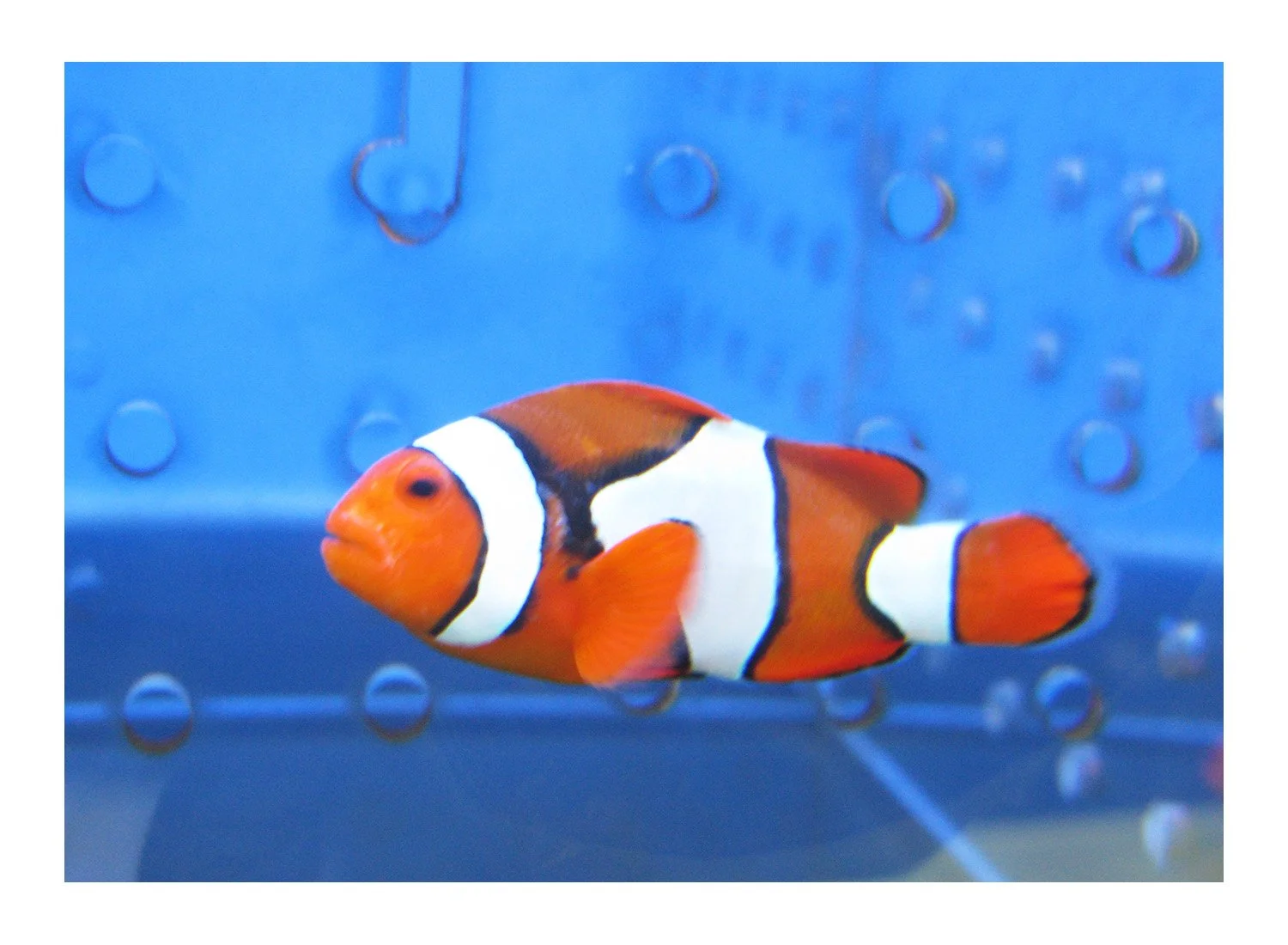
Clown Fish are born male and can change sex. They have a symbiotic relationship with sea anemones that protect them from stings (anemones are predatory marine animals that use stinging tentacles to paralyze small fish, crabs, and other prey, pulling them into their central mouth for food, while also forming vital symbiotic relationships, most famously with clownfish (offering protection for food scraps) and algae (providing shelter for sugars/oxygen), anchoring to surfaces with a sticky foot but capable of moving if needed, and playing key roles in reef ecosystems by capturing nutrients).
They communicate through popping and clicking sounds, and males are the primary caretakers of eggs.
The relationship between sea anemones and clownfish is a classic example of mutualism, a type of symbiosis where both organisms benefit: the anemone provides a safe, venomous home for the clownfish (which develops immunity via a protective mucus coat) and food scraps, while the clownfish cleans the anemone, defends it from predators, provides nutrients through waste, and attracts prey. This partnership allows the clownfish to live unharmed within the anemone's stinging tentacles, creating a secure habitat.